
Biomimetic Nanocarriers Bring New Hope for Brain Disorders
The incidence of brain diseases such as brain tumors, Alzheimer’s disease, Parkinson’s disease, and ischemic stroke is increasing year by year, posing a major challenge to the global healthcare field. However, the “ultimate barrier” that all treatment strategies must overcome is the blood-brain barrier (BBB). This seemingly thin but exceptionally tight “protective net,” while protecting the brain, also prevents more than 90% of drugs from entering the brain, making many potentially effective therapies ineffective.
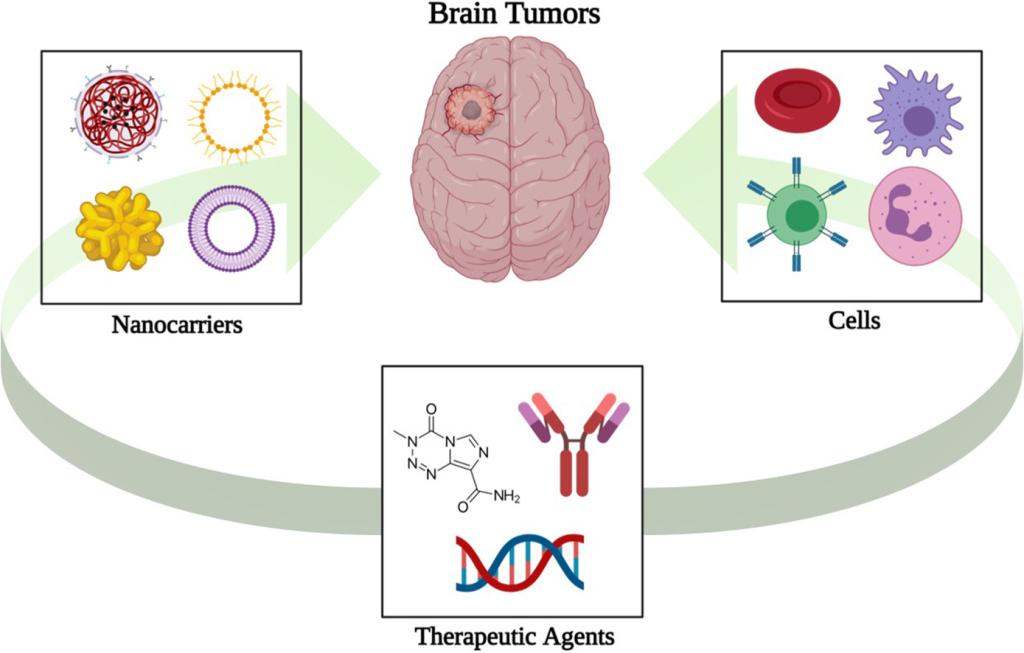
In recent years, an exciting technology is changing this situation—cell membrane biomimetic nanocarriers. Using biomimetic strategies, these nanosystems can not only silently cross the BBB but also precisely deliver drugs to the lesion site, opening up new avenues for the treatment of brain diseases. This article will provide a quick overview of the core principles, current status, and application prospects of this field.
Why is It So Difficult for Drugs to Enter the Brain?
The blood-brain barrier, composed of brain microvascular endothelial cells, astrocytes, associated neurons, and tight junctions, effectively prevents the invasion of foreign substances and maintains the stability of the brain’s microenvironment. However, it is precisely this high selectivity that prevents most biomacromolecules, protein drugs, nucleic acid drugs, and small molecule drugs from directly entering the brain.
Therefore, the key to research lies in finding a drug delivery system that does not trigger a strong immune response and can successfully “sneak into the brain.” Cell membrane-mimicking carriers have been developed based on this need.
The Core Principles of Cell Membrane Biomimetic Carriers
Cell membrane biomimetic carriers involve coating nanoparticles with a layer of cell membrane. By utilizing the inherent characteristics of cell membranes, such as immune evasion, inflammatory tropism, and homologous adhesion, the carrier can exist in the body with a “familiar identity,” thereby achieving more efficient targeted delivery.
Based on their origin, biomimetic carriers can be classified into:
- Endogenous cell membrane biomimetic carriers: such as red blood cell membranes, platelet membranes, and neutrophil membranes;
- Exogenous cell membrane biomimetic carriers: such as bacterial outer membrane vesicles (OMVs);
- Biomimetic viral systems: such as engineered oncolytic viruses.
These carriers retain the controllability of nanomaterials while inheriting the natural advantages of cell membranes, making them uniquely promising for crossing the blood-brain barrier and targeting brain diseases.
Endogenous Biomimetic Carriers: Utilizing the Body’s Own Power for Drug Delivery
- Red Blood Cell Membrane Biomimetic Carriers: High Biocompatibility and Safety
Red blood cells, the most abundant cell type in the body, lack a nucleus, meaning there is no risk of gene transfer. Their excellent biocompatibility and long circulation time make them the most commonly used biomimetic coating.
To achieve brain targeting, researchers typically modify the surface of red blood cell membranes with specific ligands (such as peptides) that can recognize brain blood vessels or brain tumor cells. Through this “functionalized camouflage,” red blood cell membrane carriers not only increase drug accumulation in the brain but also significantly reduce immune clearance.
- Platelet Membrane Carriers: A Natural Damage Tracking System
Platelets possess a natural ability to identify damage and accumulate at injured or inflamed areas immediately. Therefore, they are highly promising drug delivery systems for conditions such as stroke and traumatic brain injury.
Encapsulating drugs within platelet membrane-derived nanocarriers can significantly increase drug concentration in the brain injury area, reducing neuroinflammation and oxidative stress.
- Neutrophil Membranes: A Powerful Tool for Treating Inflammatory Brain Diseases
Neutrophils possess strong chemotactic capabilities towards inflammation, making them highly suitable for treating inflammatory brain diseases such as ischemia-reperfusion injury and immune responses after brain injury.
Biomimetic neutrophil membrane carriers can “automatically” locate inflammatory sites and precisely deliver drugs, resulting in significantly better efficacy than traditional non-targeted strategies.
Exogenous Biomimetic Carriers: Natural Penetration Capabilities from Microorganisms
Exogenous biomimetic carriers, such as bacterial outer membrane vesicles (OMVs), inherently possess certain cell recognition and invasion capabilities. Recent studies have found that encapsulating drugs or nanoparticles within OMVs can enhance drug delivery to the brain. For example, when OMVs are combined with gold nanoparticles for glioma treatment, they can significantly improve immune activation and tumor cell death rate, offering a new therapeutic direction for refractory brain tumors.
Why are Biomimetic Carriers So Important?
Biomimetic carriers stand out in the field of drug delivery across the blood-brain barrier (BBB) primarily due to:
- Immune evasion capabilities
- Enhanced biocompatibility and stability
- Excellent active targeting of inflammation and lesions
- Ability to carry multiple types of drugs, including proteins, nucleic acids, and small molecules
- Efficient crossing of the blood-brain barrier and localized release at the lesion site
These advantages make them one of the most promising technologies in current research on precise drug delivery for brain diseases.
Challenges and Future Prospects
Although biomimetic carrier technology holds great promise, it still faces several challenges:
- Difficulty in achieving large-scale, stable production
- The purity and consistency of cell membranes require standardization
- The grafting efficiency and safety of modified ligands need further optimization
- Clinical translation lacks long-term systematic research support
With the development of preparation techniques, nanoengineering, and synthetic biology, these problems are gradually being addressed. In the future, biomimetic nanocarriers are expected to become an important tool for the precise treatment of brain diseases, thus truly transforming the landscape of neurological medicine.
Reference
- Mendanha D, et al.;Biomimetic and cell-based nanocarriers – New strategies for brain tumor targeting. J Control Release. 2021, 337:482-493.
Related products
| Cat. No. | Product Name | |
| DCM24-001-L | Fe3O4-LMNVs | INQUIRY |
| CDCM24-002-L | Drugs-EMNVs | INQUIRY |
| CDCM24-003-L | BPQD-EMNVs | INQUIRY |
| CDCM24-004-L | siRNA-MNVs | INQUIRY |
| CDCM24-005-L | PLGA@Drug-EMNVs | INQUIRY |
| CDCM24-006-L | FA-PEG-MNVs | INQUIRY |
| CDCM24-007-L | 5-FU-MNVs | INQUIRY |
| CDCM24-008-L | MoSe2-EMNVs | INQUIRY |