

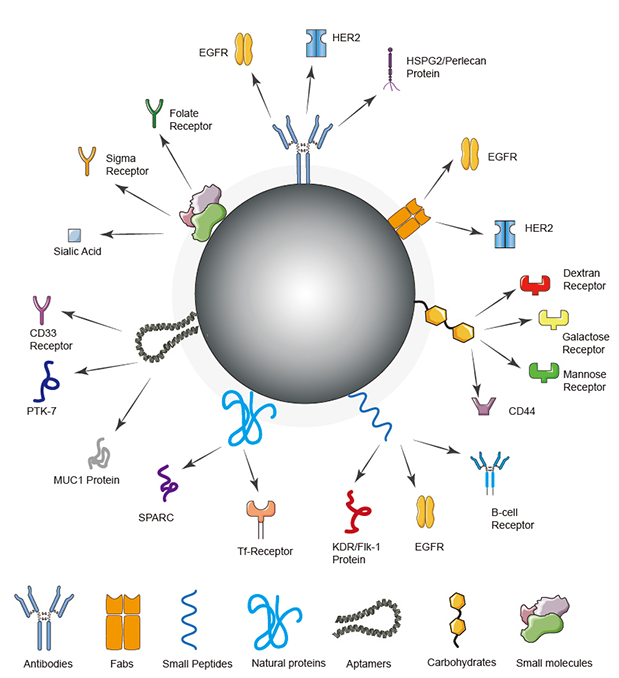
What are Drug Targeting Strategy?
A drug targeting strategy ensures drugs or their carriers reach the lesion site through specific methods which enhances drug concentrations in target tissues or cells to improve treatment effectiveness while minimizing normal tissue toxicity. Drug targeting strategies fall into three categories based on their underlying mechanisms which include passive targeting and active targeting alongside physical targeting. Passive targeting utilizes drugs or carriers physical characteristics like size and charge to accumulate within certain tissues or organs. Active targeting involves modifies the surface of drug carriers to enable them to specifically bind to target cell receptors or molecules whereas physical targeting regulates drug distribution and release by using physical signals like heat or light.
Drug Targeting Strategy Applications
- Easy-to-degrade API
- Hardly dissolved, hardly dispersed, crystalized drugs
- The drugs needed to be further processed, such as dispersion, coating or blending in a new phase
- Nanoparticles with low targeting efficiency and low targeting specificity
- Large molecular, peptide or nucleic acid drugs with insufficient cell-permeability
- Toxic chemotherapeutic agents
- Nanoparticles with low targeting efficiency and low targeting specificity
- Programmable delivery
- Cell specific, or tissue specific targeted delivery conditions
- Non-invasive therapy or minimally invasive therapy
Why Choose Our Drug Targeting Strategy Services?
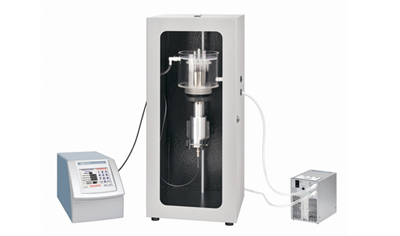
Qsonica Sonicator Q700
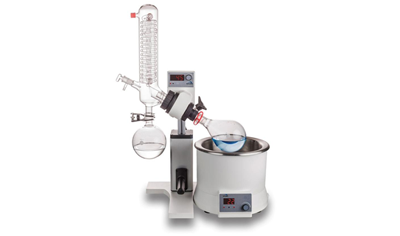
Scilogex SCI100-S 5L Rotary Evaporator
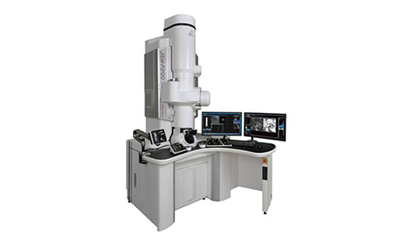
Transmission Electron Microscope (TEM)
As a trusted drug delivery manufacturer in the industry, CD Bioparticles provides customized drug targeted delivery solutions with years of professional experience in drug delivery research and development. We can bring the following advantages to your research and development process:
- Extend drug circulation time by resizing and remodeling drugs
- Hydrophobic modification of polar small molecule drugs can improve cell permeability during passive delivery
- Hydrolyzable prodrugs with extended degradation time can increase drug circulation time
- Physical encapsulation systems can improve the dispersibility and size regulation of poorly soluble drugs
- A wide range of antibodies, aptamers, affibodies, antipermeabilizers and adhesion proteins can meet your specific cell membrane transporter targeting design
- Receptor targeting moiety modification can improve drug uptake rate
- Ready-to-use, reactive end-functionalized receptor targeting moieties can simplify the preparation procedures of your labeled drugs or drug-loaded cargoes
- Drug-oriented customized liposome production and formulation can improve the delivery efficiency of drugs (such as nucleic acids, peptides or molecules)
- A wide range of stimulus-responsive building blocks will help you easily develop ideal controlled delivery systems
- Ready-to-use building blocks and polymer carrier systems simplify the preparation of drug delivery systems and ensure the reproducibility of research data
- GMP guarantees product quality
- Analytical platforms cover all aspects from drug preparation to in vitro and in vivo testing
Popular Drug Targeting Strategy Services
Drug targeting strategy is a drug delivery method that aims to accurately deliver drugs to specific lesions (such as tumor cells, inflammatory tissues or specific organs). Its basic principle is to selectively distribute drugs to target areas in the body through physical, chemical or biochemical means, thereby improving the therapeutic effect and reducing toxicity to normal tissues. There are three specific strategies:
Active Targeting By Targeting Ligands
Targeting ligand are molecules designed to identify and attach to precise receptors located on specific cells or tissues. The targeting ligand normally attaches to a drug carrier to enable accurate delivery of medication. The mechanism of action for this system depends on the specific ligand-receptor binding which directs the drug to target cells or tissues while minimizing harm to normal cells. Targeting ligands can include antibodies and other molecules such as peptides or nucleic acid aptamers which bind to receptors that are overexpressed on tumor cell surfaces to enable active targeting.
Stimuli-Responsive Controlled-Release Nanocarriers
Nanoscale drug delivery systems called stimuli-responsive controlled-release nanocarriers undergo physical or chemical changes when subjected to external stimuli like pH changes and temperature variations along with light exposure and magnetic or electric fields to achieve controlled release of drugs. Its basic composition usually includes a responsive material that is sensitive to a specific stimulus as the carrier body, and a structure or functional group that carries the drug.
Stability Improvement
Improving the stability of nanoparticles is the key to achieving passive drug targeting. Passive targeting relies on the EPR effect of tumor tissues, and requires particles to circulate in the body for a long time to achieve effective enrichment. Through PEG modification, surface charge regulation, shell coating, structural cross-linking and other methods, the physical and biological stability of nanoparticles can be enhanced, their blood circulation time can be prolonged, and thus their passive accumulation efficiency in highly permeable tissues such as tumors can be improved.
5-Step Custom Drug Targeting Strategy Process
Case Study
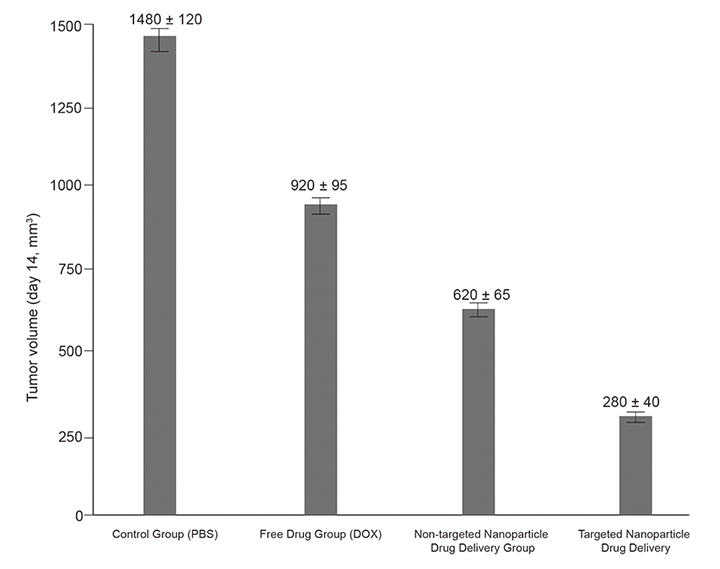
CD Bioparticles loaded DOX through targeted nanoparticles. Animal experiments on mice confirmed that targeted nanoparticles loaded with DOX significantly inhibited tumor growth, confirming that the targeting strategy improves the therapeutic effect of anticancer drugs.

1. What are the main types of drug targeting strategies and how do they differ?
Drug targeting strategies can be categorized into passive targeting, active targeting, and physical targeting. Passive targeting utilizes the physicochemical properties (like size or charge) of carriers to accumulate in target tissues such as tumors. Active targeting involves modifying drug carriers with ligands (e.g., antibodies or aptamers) that specifically bind to receptors on target cells. Physical targeting employs external stimuli (e.g., heat, light, electric fields) to control drug release and distribution.
2. In which cases is a drug targeting strategy most beneficial?
Drug targeting strategies are especially useful for:
- Drugs with poor solubility or stability
- Toxic chemotherapeutic agents
- Macromolecules like peptides or nucleic acids with poor cell permeability
- Nanoparticles with low targeting efficiency
- Formulations requiring programmable or cell-/tissue-specific delivery
- Applications needing non-invasive or minimally invasive treatment solutions
3. How does CD Bioparticles improve drug delivery efficiency through targeting strategies?
CD Bioparticles enhances drug delivery by:
- Modifying drugs to prolong circulation time
- Using hydrophobic modifications or hydrolyzable prodrugs
- Applying encapsulation techniques for poorly soluble drugs
- Providing a wide range of ligands (antibodies, aptamers, etc.) for active targeting
- Developing stimuli-responsive nanocarriers for controlled release
- Offering ready-to-use functional materials to streamline formulation and ensure reproducibility
4. What are the advantages of choosing CD Bioparticles for formulation development?
By partnering with CD Bioparticles, you benefit from:
- Customized, scalable drug delivery solutions
- Consistent and reproducible batch production
- GMP-compliant documentation
- Comprehensive analytical support from formulation to in vivo validation
- Enhanced targeting specificity and drug bioavailability